
Meet the Ambassadors
Every plant has a story... Ours have names.
At Vertae, we believe that the best way to protect nature is to help people fall in love with it first. That's why we introduced our three plant ambassadors — Sol, Milo, and Emmett. They are not just plants. They are characters, companions, and quiet heroes of the natural world around us. Get to know them.

💙 Emmett
Cyanus lugdunensis — Centaurée de Lyon — Lyon Cornflower
Status: Endangered and endemic 🔴
Emmett is our rarest ambassador, and the one closest to our hearts. He grows in exactly one place on earth: the hills and woodland edges around Lyon, France. Nowhere else. If you live near Lyon and you spot a flash of soft blue-violet in the undergrowth in May or June, there's a chance you've just met Emmett. Stop. Look. Remember the moment.
Who he is: Emmett is a dreamer. He tucks himself into the dappled light of downy oak woodlands, growing at altitudes between 150 and 300 metres, on south-facing slopes in the clearings and woodland edges of the Lyon region. He is not loud about his presence. He blooms quietly in May and June, and then he waits — trusting that the world will notice him before it's too late. We named him Emmett because it felt like the name of someone gentle and rare, someone worth protecting.
Why he needs us: Emmett is listed on the Red List of vascular flora of the Rhône-Alpes region, and is threatened primarily by urbanisation and overly intensive forestry practices. His world is shrinking, slowly, as the hills around Lyon are developed and his woodland habitats become rarer. He has no other home to go to. This is it — Lyon or nowhere. That is why Emmett is at the heart of Vertae's mission, and why we have reached out to the Conservatoire Botanique National du Massif Central, who are actively working to protect him.
His role in the wild: Like his cousins in the Centaurea family, Emmett is a generous nectar producer, making him highly attractive to butterflies and day-flying moths. In his woodland habitat, he plays a quiet but vital role in sustaining the insects that pollinate the surrounding vegetation — a small blue thread holding a much larger ecological tapestry together.
Fun fact: Emmett was first formally described by the botanist Alexis Jordan in 1844, right here in Lyon — which means this city has known about him for nearly two centuries. He can be confused with the Mountain Cornflower (Cyanus montanus), which sometimes escapes from gardens, and the Semi-decurrent Cornflower (Cyanus semidecurrens) — but Emmett has his own subtle character that, once you know him, is hard to mistake. He belongs to Lyon. He is Lyon.
His love language: Words of affirmation. Emmett just needs to know that someone sees him, that someone cares enough to say: you matter, and we're not going to let you disappear.
Comment puis-je aider :
Guide de Biodiversité du Métropole de Grand Lyon pour la Centaurée de Lyon.
🪡 Milo
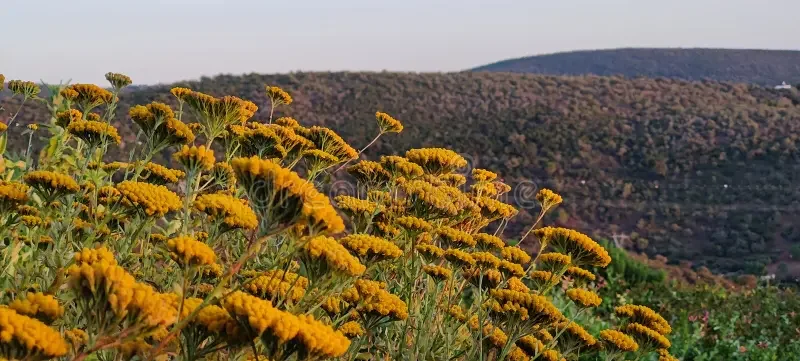
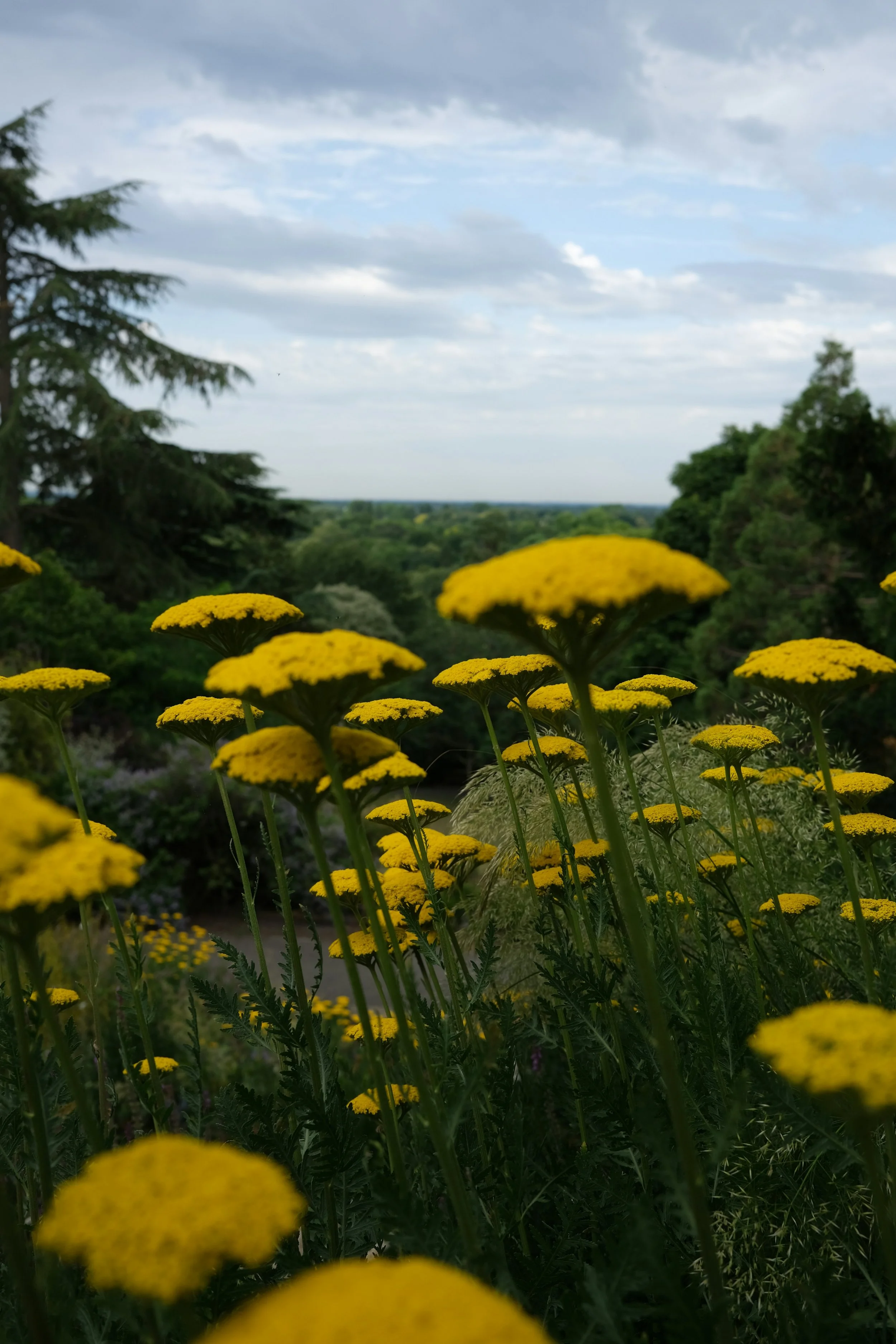
Achillea tomentosa — Achillée tomenteuse — Woolly Yarrow
Status: Locally present, regionally monitored 🟡
Milo is the quiet one. Where Sol is sunshine and drama, Milo is soft, steady, and surprisingly tough. He grows low to the ground, his silvery-green leaves as woolly and gentle as a lamb, and when he blooms, his clusters of tiny yellow flowers are like little suns packed tightly together — modest but magnificent up close.
Who he is: Milo is resilient. He thrives where others would give up: poor soils, dry conditions, full sun — he handles it all without complaint, reaching just 6 to 8 inches high. He asks for very little and gives back generously. He's the kind of quiet strength you only notice when you stop to look. At Vertae, we named him Milo because it felt right for someone so gentle yet so enduring.
His role in the wild: Milo's vibrant flowers attract a host of beneficial pollinators — bees, butterflies, and other beneficial insects — making him an important thread in the fabric of his local ecosystem. He grows across the dry, rocky hillsides and open meadows of southern Europe, stabilising soils that other plants abandon. His woolly leaves — the tomentosa in his name — trap moisture and protect him from the heat, a quiet adaptation that has kept his kind alive for centuries.
Fun fact: Milo's genus name, Achillea, comes from the Greek hero Achilles, who, according to legend, used yarrow to treat the wounds of his soldiers during the Trojan War. This is not mythology embellishment — yarrow has been found in Neanderthal burial sites dating back over 60,000 years, making it one of the oldest known medicinal plants on earth. Milo comes from ancient stock.
His medicinal legacy: The crushed plant has been applied to wounds and burns for centuries, and dried yarrow leaves were used as a tea to soothe colds, fever, and headaches across many cultures. Traditional Chinese medicine also uses yarrow as an antihaemorrhagic and wound-healing agent, and as a soothing treatment for skin disorders and snakebites. Milo has been a soldier's companion, a healer's ally, and a gardener's friend across every culture that has encountered him.
His love language: Quality time. Milo rewards the people who slow down and look closely — because his beauty is in the details.
🌞 Sol
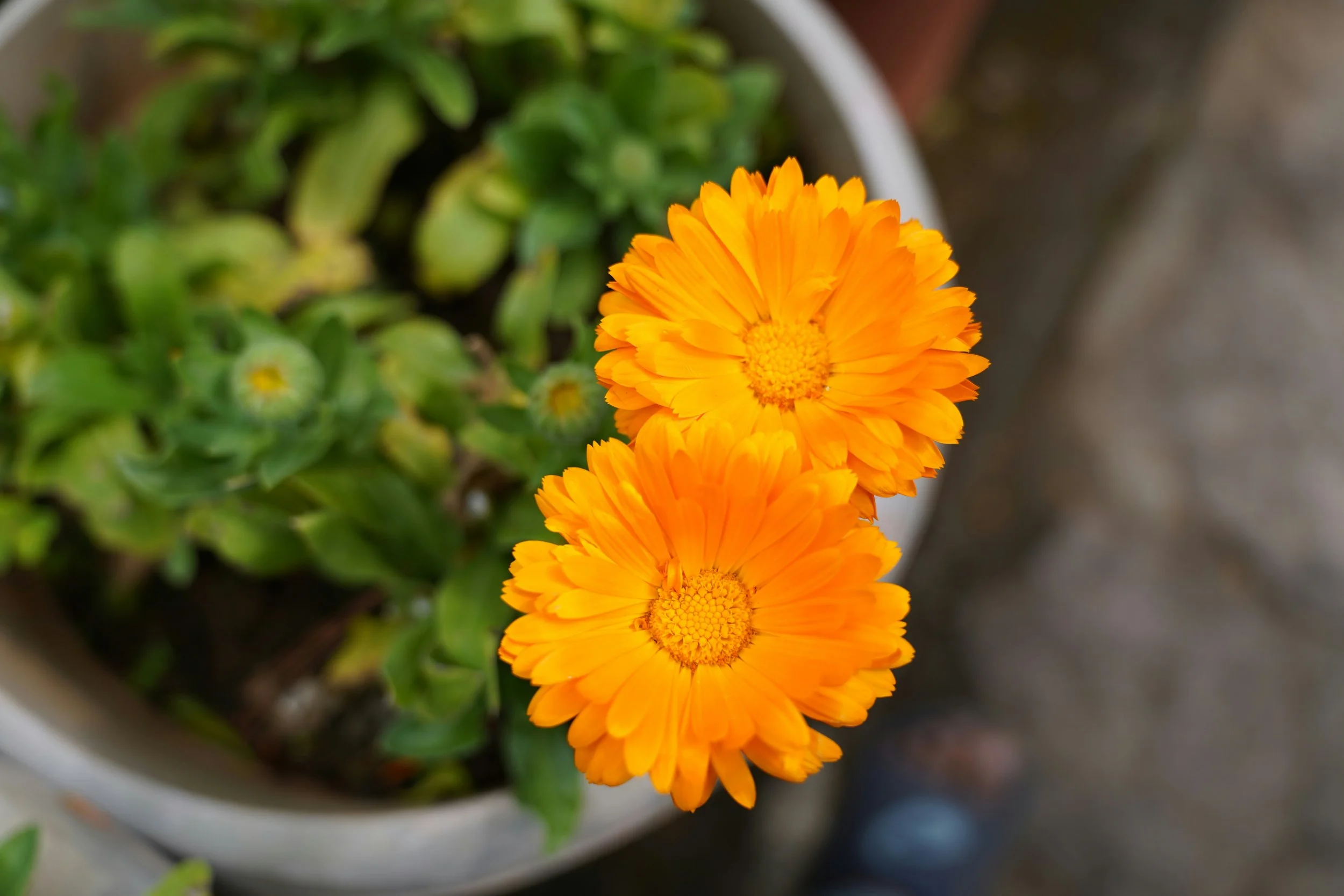
Calendula officinalis — Souci des jardins — Pot Marigold
Status: Widespread and thriving 🟢
Sol is the kind of friend who lights up every room she walks into — or in her case, every garden she grows in. Blazing orange and yellow, impossible to ignore, and generous to a fault, Sol has been showing up for humans and pollinators alike for thousands of years. She doesn't do subtle.
Who she is: Sol is bold, warm, and utterly reliable. She blooms from spring until the first frost, refusing to give up long after other flowers have called it a day. She's the one still smiling in November when everyone else has gone home. Her name at Vertae comes from the sun — sol in French and Spanish — because honestly, she earned it. Her petals open wide in the morning light and follow the sun across the sky, as if she simply can't get enough of it.
Her role in the wild: Sol is what ecologists call a "keystone companion." Her bright blooms attract pollinators like bees and butterflies, making her a great companion plant for fruits and vegetables, and she also repels certain pests like aphids while improving soil health. She also rolls out the welcome mat for hoverflies, which help control aphid populations — essentially keeping the garden's pest problem in check while looking spectacular doing it. She is, in short, a team player.
Fun fact: The name Calendula comes from the Latin word calens, meaning "first day of each month" — because in mild climates, Sol can bloom nearly year-round. She's also been used to naturally lighten hair when made into a hair wash or shampoo, and her petals produce a golden yellow dye used in food, fabric, and cosmetics for centuries. Sol is, and has always been, multi-talented.
Her medicinal legacy: Sol was highly prized in ancient Egypt for her rejuvenating properties, and in medieval Europe she was used to treat skin diseases, digestive complaints, and fever. Today, she is antiseptic, antibacterial, antifungal, and anti-inflammatory — a natural go-to for insect bites, sunburn, and wound care. You'll find her in salves, creams, teas, and tinctures across the world. She has been healing people quietly for millennia, and she's not done yet.
Her love language: Acts of service. She feeds the bees, heals the skin, cleans the air, and brightens your day — all at the same time.